Yard Grading 101: Protect Your Foundation from Water
Learn how proper yard grading and slope direct water away from your foundation, prevent leaks, and work with drainage systems to protect your home.
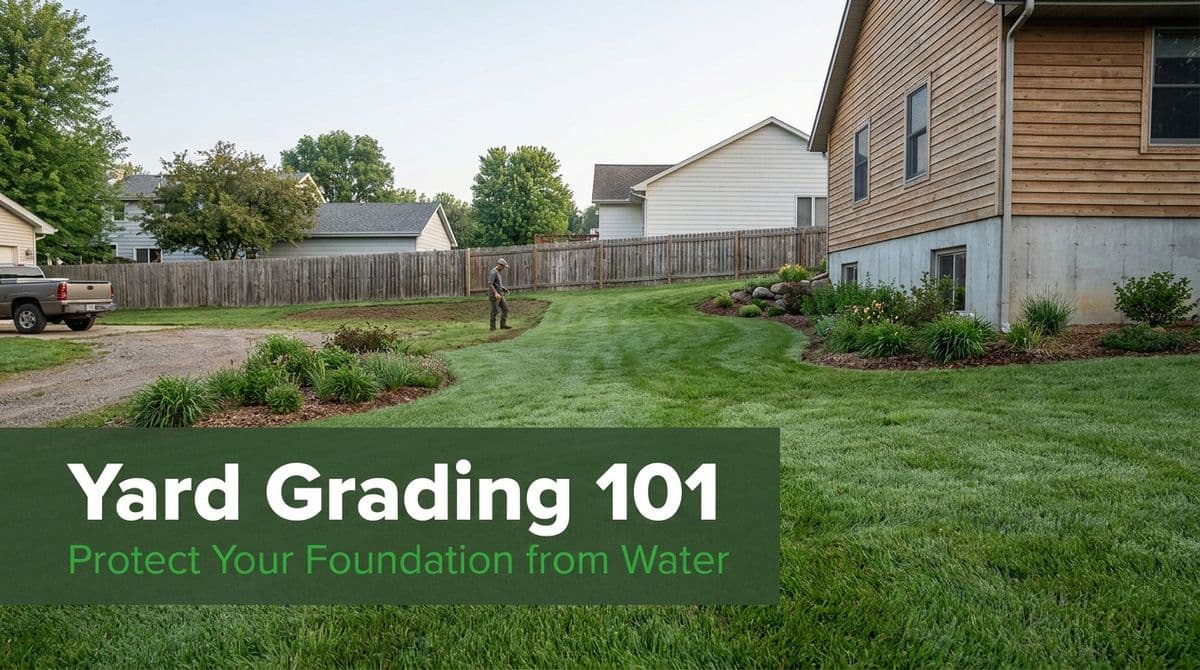
Why Yard Grading Matters for Your Foundation
We recently got a call from a homeowner — let’s call him Jason — who said, “I need my yard graded so water runs away from the foundation.” His house wasn’t huge, but every time it rained, water pooled right up against his basement wall. He was worried about leaks and long-term damage, and honestly, he was right to be concerned.
We walked Jason through what grading actually is, why it matters, and why our estimate range was “somewhere between about $1,500 and $3,000” until we could see the property. In this post, we’ll walk you through those same basics, so you know what’s going on in your yard before water becomes a serious problem.
What Is Yard Grading, Really?
At its core, yard grading is about creating the right slope so water naturally flows away from your home instead of toward it. That might sound simple, but it has a huge impact on your foundation, basement, and even your lawn’s health.
When we talk about grading around a house, we’re usually aiming for a gentle slope of roughly 1–2 inches per foot for the first 5–10 feet away from your foundation. Enough that water doesn’t sit against the wall, but not so steep that your yard becomes uncomfortable to use or starts eroding.
Why Bad Slope Is So Dangerous
If the soil slopes toward your house or is completely flat, a few things can happen:
- Water pools against the foundation, increasing the risk of seepage and basement leaks.
- Hydrostatic pressure builds up on your foundation walls, which can contribute to cracking over time.
- Soil stays soggy, which can lead to moldy smells, soft spots in the yard, and unhealthy turf.
- Frost heave issues (in colder climates) as wet soil freezes and expands against the foundation.
Jason hadn’t had a major leak yet, but he was starting to see damp spots along the inside basement wall after heavy storms — a classic early warning sign that grading isn’t doing its job.
How We Grade a Yard to Protect the Foundation
On the phone, Jason asked the same thing many homeowners do: “So what does the process actually look like?” Here’s how we typically approach a grading project like his.
1. Assess the Existing Slope
First, we walk the property and look for the obvious clues:
- Where water currently collects after rain
- Low spots near the house or in the yard
- Downspout discharge points creating erosion or puddles
- Settled areas along the foundation where soil has sunk over time
Then we use levels or laser tools to measure the actual slope away from your foundation. Sometimes the yard looks “fine” by eye, but our tools tell a different story.
2. Establish the Correct Grade
Next, we plan where we want water to go. That might be:
- A swale (a shallow, grassy channel) that guides water toward a safe discharge area
- A lower area away from the house where water can soak in safely
- A drainage system like a French drain, if needed (more on that below)
We then rework the soil so that, starting from the foundation, the ground gently drops away. Around most homes, that means building up soil along the wall and feathering it out into the yard.
3. Compact and Finish the Surface
Simply dumping soil along the house isn’t enough. We:
- Compact the soil so it doesn’t immediately settle back toward the house
- Blend new soil into the existing yard so there isn’t a harsh “bump” where we worked
- Restore turf with seed or sod so everything looks clean and finished
By the time we’re done, the yard should look natural and usable — with the added bonus that water now knows exactly where to go.
How Yard Grading Works with French Drains and Other Systems
Many homeowners ask if they need a French drain when they’re already planning grading work. The answer is: sometimes.
Grading is always the first line of defense. If surface water is clearly running toward the house, we fix that with slope before adding anything underground. A French drain or other drainage system becomes helpful when:
- Your yard sits lower than neighboring properties and collects runoff
- You have a naturally high water table or constantly soggy areas
- There’s limited space to create enough surface slope away from the foundation
In those cases, we’ll often combine a proper surface grade with:
- French drains to intercept groundwater and move it away
- Catch basins in low spots where water naturally gathers
- Extended downspout piping to discharge roof water further out
The key idea is that grading and drains work together. The grade guides water toward safe collection points, and the drains carry it away from the home.
Common Yard Grading Myths We Hear
On calls like Jason’s, we hear a few misconceptions over and over. Clearing these up can save you time and money.
“I Just Need a Little Dirt Against the House.”
Adding a quick load of soil right up against the foundation might help for a season, but without shaping the whole slope and compacting properly, that soil often settles and sinks. Within a year or two, you can end up right back where you started.
“My Gutters Look Fine, So Grading Won’t Matter Much.”
Gutters and downspouts help, but they only move roof water off the house. If the ground still slopes the wrong way, or downspouts dump water right at the foundation, you’ll still have moisture issues. Gutters and grading need to work as a team.
“If I Haven’t Had a Leak Yet, I’m Safe.”
Jason fell into this category for a while: some dampness, but no standing water in the basement. The truth is, foundation and basement problems often show up after years of poor grading. Fixing slope early is almost always cheaper than repairing a damaged foundation or flooded basement later.
Why Estimates Vary So Much
Jason’s other big question was about cost: “If it’s between $1,500 and $3,000, that’s a big difference. How do you know what it’ll actually be?” And he’s right — that range is wide until we see the yard in person.
A few factors affect the price:
- Size of the area that needs to be re-graded
- How out-of-level the yard currently is
- Access for equipment (tight backyards can be more labor-intensive)
- Amount and type of soil needed to correct the slope
- Whether drainage components like French drains or extensions are added
That’s why we, just like we did with Jason, schedule a free on-site estimate. Once we see the property, we can give a precise number instead of a ballpark range.
Simple Things You Can Check Right Now
If you’re wondering whether your yard is putting your foundation at risk, here are a few quick checks you can do before calling anyone:
- After a rain, walk around your house — do you see puddles along the foundation?
- Look at the first 5–10 feet of soil — does it visibly slope down and away from the house?
- Check your downspouts — do they discharge at least 5–10 feet from the foundation?
- Inside, do you notice damp walls, musty smells, or efflorescence (white mineral deposits) in the basement?
If you’re seeing any of these, there’s a good chance grading is part of the solution.
Protecting Your Home Starts at Ground Level
We told Jason the same thing we tell most homeowners: a healthy yard isn’t just about green grass — it’s about how water moves across your property. Proper grading is one of the simplest, most effective ways to protect your foundation, reduce moisture problems, and keep your lawn usable.
If you’re noticing water hanging around your home after storms, or you’re just not sure if your slope is right, we’re always happy to come out, take a look, and give a clear, detailed plan for getting water to flow the right way: away from your house.