Designing a Low‑Maintenance Rental Backyard That Lasts
Learn how we design low‑maintenance rental backyards with smart patio choices, simple ground covers, and safe, clean landscaping around HVAC units.
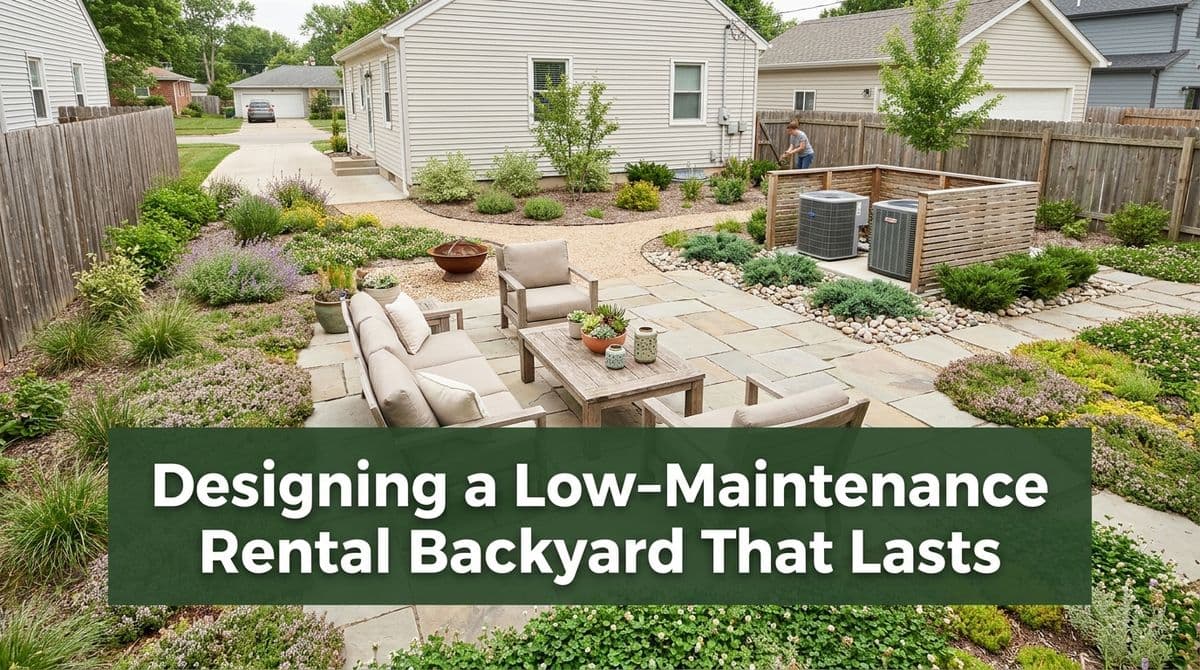
Designing a Low‑Maintenance Rental Backyard That Actually Stays Low‑Maintenance
We recently got a call from a customer — let’s call him David — who had just bought a rental house. The backyard was basically bare dirt, and he told us, “We’re planning a patio area and then, near the HVAC and around the house, we’re thinking mulch or stone… whatever is lowest maintenance.”
We hear this kind of question a lot from rental property owners. They want something that looks good in listing photos, is tough enough for tenants, and doesn’t turn into a weekend project every month. During our walkthrough with David, we sketched out some options for his patio, ground covers, and landscaping around the HVAC units. In this post, we’ll walk you through the same thought process we used with him.
Step One: Choose a Tenant‑Proof, Low‑Upkeep Patio Surface
For a rental property, we usually focus on three main patio options: concrete, pavers, and gravel. Each one can be done in a way that keeps maintenance low and tenants happy.
Concrete Patio: Simple and Sturdy
With David, we started by talking about a basic poured concrete pad. For many rentals, this is the workhorse option:
- Pros: Very durable, easy to sweep or hose off, no shifting under furniture, great for grills.
- Cons: Plain concrete can look a little bland, and cracks are possible over time if drainage isn’t handled correctly.
If we go this route, we often suggest adding a simple broom finish for traction and sometimes a subtle tint or saw‑cut pattern to dress it up without adding a lot of cost or maintenance.
Paver Patio: A Bit More Style, Still Low Maintenance
We also walked David through a paver option. With rental homes, we keep paver designs straightforward:
- Pros: Looks more upscale, individual pieces can be replaced, and drainage is usually very good.
- Cons: Slightly higher upfront cost, and weeds can sneak into the joints if we don’t prep and edge it correctly.
To keep a paver patio rental‑friendly, we focus on a solid compacted base, polymeric sand in the joints, and clean edging. That minimizes shifting and weed growth so tenants aren’t battling maintenance.
Gravel Patio: Budget‑Friendly and Flexible
For some rental yards, especially where budgets are tight, a gravel seating area makes sense. With David, we discussed using compacted gravel bordered by stone or metal edging:
- Pros: Lower cost, drains well, very forgiving if ground settles.
- Cons: Not ideal for all tenants (loose surface), and gravel can wander without good edging.
When we recommend gravel, we usually pair it with a sturdy border, a weed barrier underneath, and a finer top layer that compacts better underfoot.
Ground Covers That Don’t Turn Into Work for You (or Tenants)
Once we defined the main patio zone for David, the next question was: what do we do with the rest of the bare backyard so it doesn’t become mud, weeds, or a mowing nightmare?
Rock vs. Mulch vs. Turf
For rentals, we generally lean toward decorative rock and mulch in non‑play areas, and turf only where grass is truly needed.
- Decorative rock: Very low maintenance, great around foundations and along fence lines, doesn’t decompose.
- Mulch: Softer look, good around plant beds, but needs top‑ups every 1–2 years.
- Turf (natural grass): Looks great but requires mowing, edging, and irrigation. We usually keep this area small on rentals.
With David, we suggested a combination: hard surface for the main hangout zone, rock around the perimeter and HVAC, and just a modest patch of grass where it made sense for tenants to have a little green.
Prep Matters More Than the Material
Whatever ground cover we choose, we’ve learned that prep is what makes it truly “low‑maintenance”:
- We correct any drainage issues first so water doesn’t pool or wash out mulch or rock.
- We install a quality weed barrier under rock areas, especially in rentals.
- We keep tree and shrub plantings simple and drought‑tolerant so tenants don’t have to be expert gardeners.
That’s the same approach we laid out for David’s backyard: get the grading right, then lock in durable surfaces.
Smart, Safe Landscaping Around HVAC Units
One of David’s biggest questions was what to do around the HVAC unit. He asked if he should use mulch or stone near the system and around the foundation. We walked him through how we handle this on other rental properties.
Clear Space Is Non‑Negotiable
We always keep at least 2–3 feet of clear space on all sides of the outdoor unit so technicians can access it and air can flow freely. We avoid planting shrubs right up against it, and we never build structures that block service panels.
Mulch vs. Rock Around the Unit
For the area immediately around the HVAC, we usually recommend:
- Rock if the yard is messy or prone to mud. Rock stays put better than mulch and doesn’t get sucked into the unit as easily.
- Mulch a little farther out in planting beds if the owner wants a softer look, as long as we keep a clear, rock or bare strip right by the unit.
With David, we suggested a simple bed of small decorative rock on weed barrier around the unit, with low plantings set back to avoid blocking airflow.
Protecting the System and Your Investment
We also keep these details in mind whenever we landscape around HVAC on rentals:
- We avoid small loose gravel that can get kicked into fan blades.
- We don’t block condensate lines or electrical access points with plants or edging.
- We check that water from downspouts and grading runs away from the house and the unit pad.
Those small choices help prevent service issues and keep the system looking neat for inspections and future tenants.
Pulling It All Together for a Rental‑Ready Backyard
By the time we wrapped up with David, we had a simple, low‑maintenance plan: a durable patio, rock and mulch in the right places, and a clean, accessible zone around the HVAC. The goal was a backyard that photographs well, holds up to real‑life use, and doesn’t turn into a constant chore — for him or his tenants.
If you have a rental property with a bare or troublesome backyard, we can walk you through the same kind of options and help you build a space that looks good and stays easy to manage year after year.