Emerald Ash Borer & Problem Trees: Plan a Yard Makeover
Learn how we turn emerald ash borer and problem trees into an opportunity for a full backyard makeover, from safe removal to smart replanting and patio design.
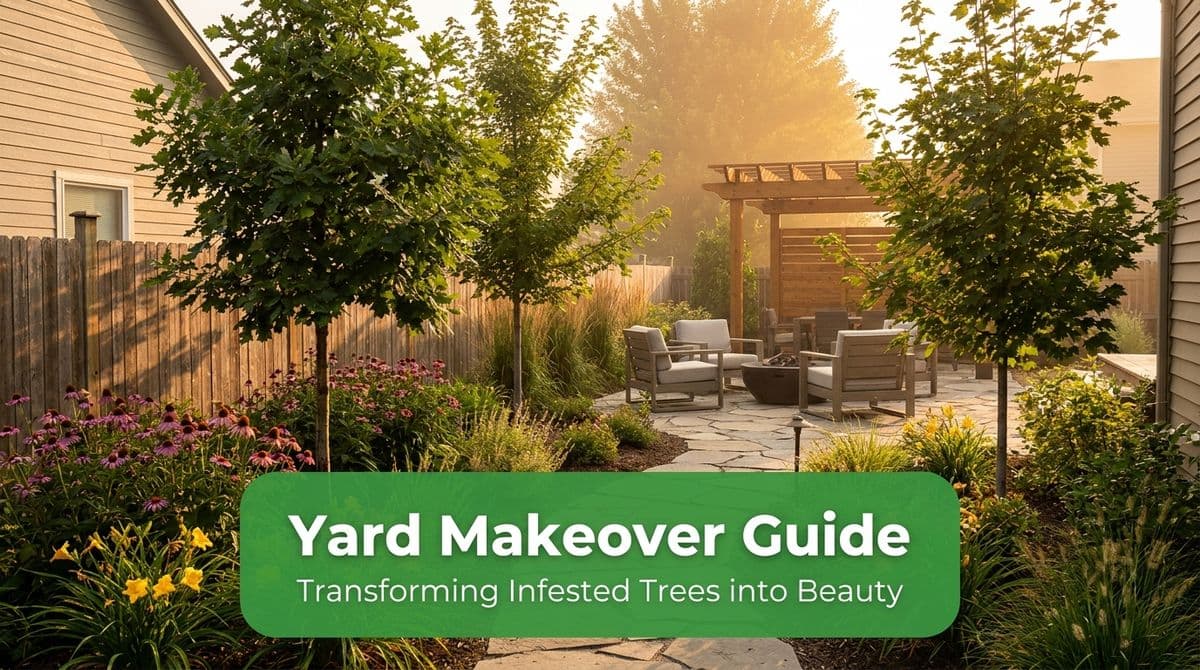
From “Emergency Yard” to Dream Backyard
We recently got a call from a homeowner — let’s call her Kelly — who told us, laughing a little, “Our yard is in bad shape right now.” She had emerald ash borer in a couple of trees, other trees growing in all the wrong spots, weeds everywhere, and a big dream of rethinking the whole backyard with a new patio.
If that sounds familiar, you’re not alone. When problems show up, they tend to show up everywhere at once: sick trees, crowded beds, cracked patio, tired lawn. The good news is, when we plan it right, we can turn a stressful situation (like emerald ash borer) into the perfect chance for a backyard makeover.
We’ll walk you through how we approach situations like Kelly’s — from spotting emerald ash borer, to deciding what needs to come out, to choosing better planting spots and tying it all into a fresh landscape or patio design.
How to Spot Emerald Ash Borer in Your Yard
Emerald ash borer (EAB) is a tiny metallic-green beetle that does massive damage to ash trees. By the time many homeowners call us, the insects have already been there for a while.
Common signs we look for
- Thinning canopy: The top of the tree looks bare or patchy while lower branches still have leaves.
- Dead branches in the upper third: A classic EAB pattern — decline starts at the top and works downward.
- D-shaped exit holes: Small (about 1/8") D-shaped holes in the bark where adults emerge.
- Bark splitting and woodpecker activity: Bark cracks exposing S-shaped tunnels, with woodpeckers hammering at the trunk for larvae.
If you see more than one of these symptoms on your ash tree, it’s time to have us (or another professional) take a closer look. Early detection matters — it can be the difference between treating a tree and having to remove it.
When Removal Is Necessary (and When It’s Not)
With Kelly, one of the first questions was, “Do these ash trees have to come down, or can we save them?” We hear that a lot, and it’s a fair question — nobody wants to lose a mature shade tree if they don’t have to.
Factors we consider before removing an ash tree
- How advanced the damage is: If more than about 30–40% of the canopy is gone or dead, removal is usually the safest and most cost-effective option.
- Tree location and risk: An infested ash near a house, driveway, playset, or neighbor’s property turns into a hazard as it weakens.
- Overall health and structure: If the tree already has decay, poor structure, or storm damage, treatment usually won’t be worth it.
Healthy ash trees with early signs of EAB can sometimes be treated with injections or other professional treatments. But once decline is obvious, we generally recommend removal. Dead and dying ash trees become brittle quickly, and we want them safely down before they start dropping big limbs.
Dealing With “Problem Trees” in Bad Spots
On top of the ash issues, Kelly had a few younger trees that were “growing in bad spots” — too close to the house, crowding each other, or sitting right where she dreamed of putting a patio.
Can we move your existing trees?
Sometimes, yes. When we evaluate a tree for transplanting, we look at:
- Tree size and age: Small ornamental trees and shrubs move best. Large, established trees are harder and riskier to transplant.
- Root space and access: We need enough room to dig a proper root ball and the right access for equipment.
- Timing: Spring and fall are usually the best seasons to move trees in our climate.
If a tree is simply in the wrong place and is still a good candidate, we can often relocate it to a better spot. If not, we talk through safe removal and what to plant instead.
Choosing Better Locations for New Trees
Once we know what’s coming out, we help homeowners think about what comes next. This is where we can fix the issues that led to “bad spots” in the first place.
How we pick new planting spots
- Sun vs. shade: We match species to the actual light your yard gets, not just what the tag at the garden center says.
- Distance from structures: We give roots and branches room to grow away from foundations, roofs, and power lines.
- Future size: We plan for how big the tree will be in 10–20 years, not just how it looks today.
- Drainage and soil: Low, soggy spots and very compacted soil are usually better for certain shrubs or grading changes than for big trees.
The goal is to put the right tree in the right place so you’re not calling us again in a few years because a pretty little sapling grew into a huge problem.
Tying Tree Work Into a Backyard Redesign
Kelly’s call wasn’t just about sick trees; she also wanted to rethink the backyard with a new patio and better layout. That’s our favorite kind of project, because tree work and landscaping fit together naturally.
Why it pays to plan everything together
- Smarter layout: We can remove or relocate trees before pouring a patio, adding a fire pit, or redesigning beds so nothing has to be undone later.
- Better shade and views: We place new trees to shade the patio, frame views from key windows, and block unwanted sights like neighboring sheds.
- Cleaner construction: Doing removals, grading, and hardscaping in one plan usually means fewer surprise costs and less disruption to your yard.
For a yard that feels “in bad shape,” we often start with a simple master plan: where the patio will go, which trees stay, which go, and where new plantings will help the whole space feel finished.
Practical Next Steps for Homeowners
If you’re looking around your own yard and seeing a mix of emerald ash borer, awkward trees, and landscape ideas, here’s how we suggest moving forward:
- Walk your yard with a notepad: List every tree, what concerns you about it, and what you’d love the space to become.
- Take clear photos: Wide shots of the whole yard and close-ups of any suspicious bark, holes, or dead branches.
- Schedule a professional visit: Have us (or another reputable company) assess EAB risk, hazards, and transplant potential.
- Talk dreams and budget: Be honest about what “backyard makeover” means to you — from a simple safe cleanup to a full patio and planting redesign.
That’s exactly what we’re doing with Kelly: tackling the emerald ash borer issue, removing the most problematic trees, saving what we can, and then using that clean slate to design a backyard she’s actually excited to spend time in.
If you’re ready to turn an “emergency yard” into a space you love, we’re here to help you plan it step by step.