Dead Lawn Rescue: Reseed, Sod, or Start Over?
Staring at a dead, patchy lawn? Learn how to decide between reseeding, sodding, or a full lawn renovation, plus step‑by‑step tips for small yards.
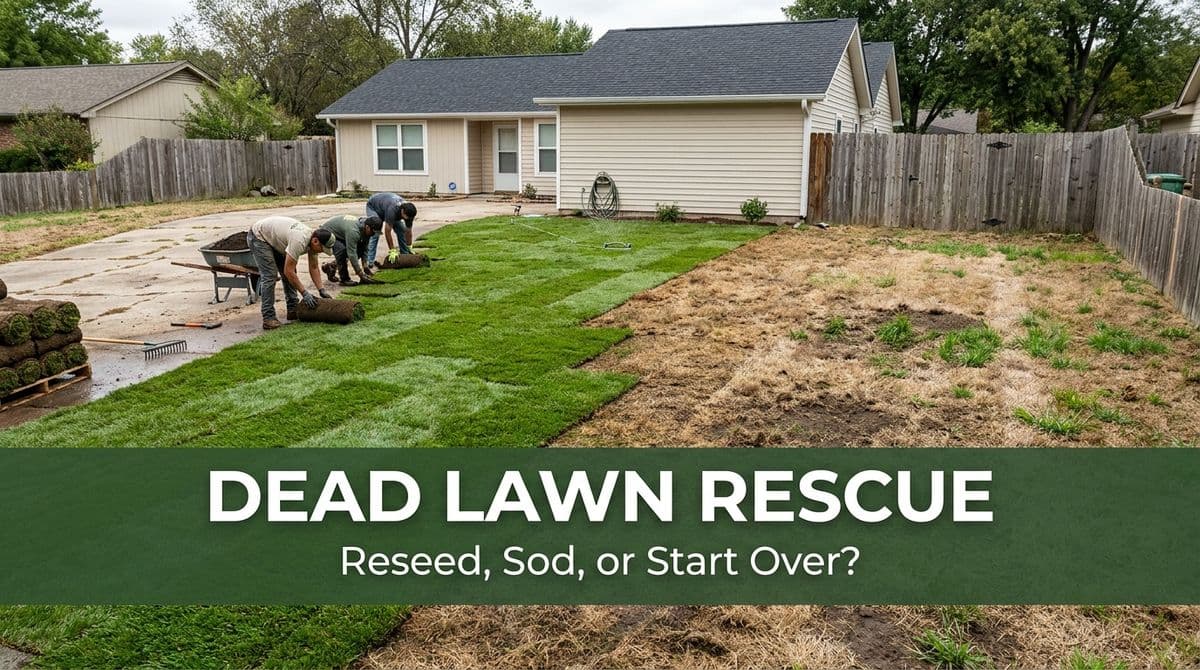
“The Lawn Is Just Awful” – Where Do You Even Start?
We recently got a call from a customer — let's call him Mark — who owns a small rental property with what he described as “just an awful lawn.” No grass left, mostly dead patches, and he was convinced it all needed to be tilled up and completely redone.
On top of that, his neighbor had asked if we could look at her yard too, since she was dealing with the same problem. Both yards were small, both were mostly dead, and both owners were wondering the same thing:
- Should we reseed the lawn?
- Should we lay sod?
- Or should we just start over completely and till everything up?
If you’re looking at a tired, patchy yard and asking the same questions, you’re not alone. Here’s the step‑by‑step process we walked Mark through — and the same one we use when we come out to quote a “dead” lawn.
Step 1: Is Your Lawn Really Dead or Just Mostly Dead?
Before you decide between seed, sod, or a full restart, you need to know what you’re working with. When we walk a property like Mark’s, we look for:
- Any green grass at all – even small clumps can be a good sign.
- Soil condition – is it rock‑hard, bare, or covered in thatch?
- Weeds vs. bare dirt – mostly weeds means a different approach than mostly bare soil.
- Shade and traffic – trees, dogs, kids, and footpaths change what will actually survive.
You can do a quick version of this yourself. Grab a small trowel and:
- Dig a few inches down in a few spots.
- Check for moisture (slightly damp is good, bone-dry isn’t).
- Look for white grass roots — if you see them, there’s some life left.
If there’s a fair amount of living grass and the main issues are weeds or thin spots, you may not need to start from scratch. But if it looks like Mark’s place — almost nothing but dead material and dust — it’s time to choose between reseeding, sodding, or a full renovation.
Option 1: Reseeding a Small Yard – Best for Budgets
When a customer tells us, “I just want it to be a lawn again,” the most budget‑friendly way to do that is usually reseeding, especially on small yards.
Reseeding is a good fit if:
- You’re okay waiting a few weeks for it to fill in.
- You’re willing to water consistently.
- The soil isn’t totally compacted like concrete.
Basic reseeding steps for a small yard:
- Scalp mow and clean up – Mow as low as your mower will go, bag the clippings, and rake away debris and dead thatch.
- Loosen the topsoil – Use a rake or a rented power rake/verticutter to rough up the top 1/4–1/2 inch of soil.
- Broadcast a quality seed mix – Choose a grass type suited to your region and sun/shade level.
- Lightly rake – Just enough to get the seed in contact with soil; don’t bury it deep.
- Topdress thinly – Optional but helpful: a light layer of compost or peat moss.
- Water gently but often – Keep the top layer moist (not soaked) for 2–3 weeks.
For landlords like Mark, we usually remind them that reseeding means a bit of a “babying” period. If tenants or pets trample the new seedlings, results will suffer.
Option 2: Going With Sod – Fast Results, Higher Cost
Sometimes, speed is the priority. If you’re about to list a home for sale or you don’t want your rental to sit with a dirt yard, sod can make sense.
Sod is a good fit if:
- You want an “instant lawn” look in a day or two.
- You’re willing to invest more up front.
- You can commit to heavy watering for the first few weeks.
Basic sod installation steps:
- Kill and remove existing growth – Spray existing weeds/grass, then remove or scalp them after they die back.
- Loosen and level the soil – Till or at least rake the top couple of inches; add topsoil where needed.
- Grade for drainage – Make sure water flows away from the house and doesn’t pool.
- Lay sod tightly – Stagger the seams like brickwork; press edges together firmly.
- Roll and water – Use a lawn roller if you have one, then water deeply right away.
With small yards, sod can actually be more affordable than people think, because you’re covering less square footage. When we walk smaller properties, we usually price both sod and seed so owners like Mark can weigh the cost vs. speed.
Option 3: Complete Lawn Renovation – When You Truly Start Over
In some cases, like the property Mark called about, the best answer really is, “Let’s start over.” That doesn’t always mean rototilling everything (we’re careful with that, because over‑tilling can create bumpy, fluffy soil). But it does mean a full renovation process.
A full renovation makes sense if:
- The yard is mostly bare dirt and dead grass.
- The soil is compacted, rocky, or poorly graded.
- Drainage issues are causing standing water or muddy spots.
Typical full-renovation steps:
- Remove or kill everything – Existing weeds and struggling turf need to go.
- Address grading and drainage – This is the time to fix low spots and slopes.
- Amend the soil – Add compost or quality topsoil where the existing soil is poor.
- Choose your finish – Either lay sod or do a heavy overseed on the prepped soil.
- Set up a watering plan – Sprinklers or timers help protect your investment.
For small yards, the labor to renovate is often manageable, which is why many owners ask us for a “totally redone” option like Mark did. The key is deciding whether the result you want justifies the extra time and cost.
How to Decide: Seed, Sod, or Start Over?
When we walk a property, we typically ask homeowners (or landlords like Mark) a few simple questions:
- What’s your timeline? Do you need it looking good in weeks, or is a season okay?
- What’s your budget? Are you aiming for the lowest cost, or best result?
- Who will maintain it? Will someone be able to water and mow correctly?
As a quick guide:
- Choose reseeding if you want to save money and don’t mind waiting.
- Choose sod if you want instant results and can spend more.
- Choose a full renovation if the yard is truly shot or has soil/drainage problems.
Need a Pro to Look at Your “Awful” Lawn?
If your yard looks like Mark’s and you’re not sure whether to reseed, sod, or start from scratch, we’re happy to walk it with you, talk through your goals, and give you a straightforward bid for each option.
Sometimes you don’t need a complete overhaul — and sometimes, like Mark suspected, you really do. Either way, getting a clear plan is the first step to turning “just awful” into a lawn you’re proud of.